зарубежная классика
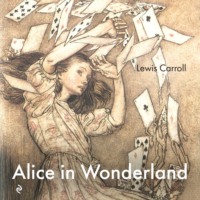
Alice in Wonderland
Льюис Кэрролл
[i]Алиса в Стране чудес[/i] Отправляйтесь в удивительную Страну чудес вместе с Алисой! Слушайте волшебную повесть в оригинале и наслаждайтесь неповторимой игрой слов, тонкими каламбурами и мягким юмором Льюиса Кэрролла. Вас ждут встречи с...
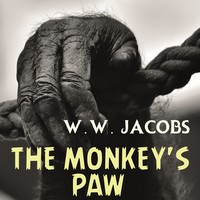
The Monkey's Paw
William Wymark Jacobs
"""The Monkey's Paw"" is a supernatural short story by author W. W. Jacobs, first published in England in the collection The Lady of the Barge in 1902. In the story, three wishes are granted to the owner of The Monkey's Paw, but the wishes come...
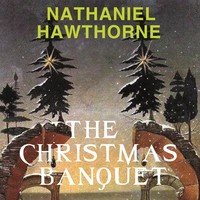
The Christmas Banquet
Натаниель Готорн
"First published in the United States Magazine and Democratic Review, XIV (January, 1844), “The Christmas Banquet shares its subtitle—from the unpublished “Allegories of the Heart—with “Egotism; or the Bosom-Serpent, another Hawthorne story of...

The Best of Oscar Wilde
Оскар Уайльд
"Selected works of Oscar Wilde ""Best of Oscar Wilde"" is the book that everyone should read to understand themselves and each other. “The ones who are able to see the high meaning of beauty are cultural people. However, the chosen one is the one...
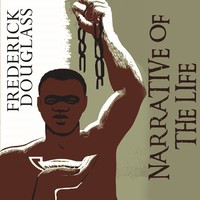
Narrative of the Life of Frederick Douglass, an American Slave
Douglass Frederick
"Narrative of the Life of Frederick Douglass is an 1845 memoir and treatise on abolition written by famous orator and former slave Frederick Douglass during his time in Lynn, Massachusetts. It is generally held to be the most famous of a number...

The Christmas Tree and the Wedding
Федор Достоевский
The Christmas Tree and the Wedding" is a short story written by Russian author Fyodor Dostoyevsky published in 1848. The piece is narrated by an awkward outcast attending a Christmas party. He observes the party's guest of honour and takes...

Selected works of Saki
Саки
"Hector Hugh Munro (18 December 1870 – 14 November 1916), better known by the pen name Saki and also frequently as H. H. Munro, was a British writer whose witty, mischievous and sometimes macabre stories satirize Edwardian society and culture. He...

The Best of Washington Irving
Вашингтон Ирвинг
"Washington Irving (April 3, 1783 – November 28, 1859) was an American short story writer, essayist, biographer, historian, and diplomat of the early 19th century. He is best known for his short stories ""Rip Van Winkle"" (1819) and ""The Legend...

No Longer Human
Osamu Dazai
"No Longer Human (1948, Ningen Shikkaku / A Shameful Life / Confessions of a Faulty Man) was an attack on the traditions of Japan, capturing the postwar crisis of Japanese cultural identity. Framed by an epilogue and prologue, the story is told...

Notes from the Underground
Федор Достоевский
Notes from Underground also translated as Notes from the Underground or Letters from the Underworld, is an 1864 novella by Fyodor Dostoevsky. Notes is considered by many to be one of the first existentialist novels. It presents itself as an...

The Dream of a Ridiculous Man
Федор Достоевский
"The Dream of a Ridiculous Man" (Russian: Сон смешного человека, Son smeshnovo cheloveka) is a short story by Fyodor Dostoyevsky written in 1877. It chronicles the experiences of a man who decides that there is nothing of any value in the world....

The Metamorphosis
Франц Кафка
The Metamorphosis (German: Die Verwandlung) is a novella written by Franz Kafka which was first published in 1915. One of Kafka's best-known works. Gregor Samsa wakes up one morning to find himself transformed into a "monstrous vermin". He...

Tales of the Alhambra (Selected stories)
Вашингтон Ирвинг
For a while, the famous writer Irving Washington was an employee of the American diplomatic mission in Spain. He spent three months in the famous Alhambra Palace. This acquaintance with the historical relic inspired him to write this book. In...
The Conquest of Bread
Пётр Кропоткин
The Conquest of Bread is an 1892 book by the Russian anarcho-communist Peter Kropotkin. Peter Kropotkin was born a Russian prince whose father owned 1,200 serfs. But he became a Russian activist, writer, revolutionary, scientist, economist,...

The King in Yellow
Chambers Robert William
"The King in Yellow is a book of short stories by American writer Robert W. Chambers, first published by F. Tennyson Neely in 1895. The book is named after a play with the same title which recurs as a motif through some of the stories. The first...
The Legend of Sleepy Hollow
Вашингтон Ирвинг
"The favorite story of the Dutch settlement of Sleepy Hollow, New York, is an ominous ghost story. A headless horseman is waiting for belated travelers. Ikabod Crane, who believes in everything beyond, cares for Katharina Van Tassel, the blonde...

Rip Van Winkle
Вашингтон Ирвинг
"""Rip Van Winkle"" is a short story by the American author Washington Irving, first published in 1819. It follows a Dutch-American villager in colonial America named Rip Van Winkle who falls asleep in the Catskill Mountains and wakes up 20 years...

Common Sense
Пейн Томас
Thomas Paine was born in Great Britain; he came to America at the age of 37 for the first time. He is rightly considered to be the Anglo-American writer, philosopher, publicist, as well as "American godfather" for supporting separatist spirits...

A Changed Man
Томас Харди (Гарди)
"A Changed Man is a collection of twelve tales written by Thomas Hardy. The collection was originally published in book form in 1913, although all of the tales had been previously published in newspapers or magazines from 1881 to 1900. There are...

The First Jungle Book
Редьярд Джозеф Киплинг
"The Jungle Book (1894) is a collection of stories by the English author Rudyard Kipling. Most of the characters are animals such as Shere Khan the tiger and Baloo the bear, though a principal character is the boy or ""man-cub"" Mowgli, who is...

The Prince
Никколо Макиавелли
The Prince is a 16th-century political treatise by the Italian diplomat and political theorist Niccolo Machiavelli. From correspondence a version appears to have been distributed in 1513, using a Latin title, De Principatibus (Of Principalities)....

The Secret Garden
Фрэнсис Элиза Ходжсон Бёрнетт
Nobody loves Mary - the heroine of the famous story of Francis Burnett "The Secret Garden." However, she does not burn with love for others, and moreover - she can not stand the whole world. And then her parents are passing away prematurely....

The Curious Case of Benjamin Button
Фрэнсис Скотт Фицджеральд
"The Curious Case of Benjamin Button" is a short story written by F. Scott Fitzgerald. First published in Collier's Magazine on May 27, 1922. It was subsequently anthologized in his book Tales of the Jazz Age, which is occasionally published as...

The Diamond as Big as the Ritz
Фрэнсис Скотт Фицджеральд
The Diamond as Big as the Ritz is a novella by novelist F. Scott Fitzgerald. It was first published in the June 1922 issue of The Smart Set magazine, and was included in Fitzgerald's 1922 short story collection Tales of the Jazz Age. Much of the...

The Camel's Back
Фрэнсис Скотт Фицджеральд
When Perry Parkhurst decides that his long-time engagement to Betty Medill has gone on long enough, he presents her with a marriage license and an ultimatum: get married immediately or end the relationship all-together. But things don’t go quite...

The Offshore Pirate
Фрэнсис Скотт Фицджеральд
"The Offshore Pirate" is a short story written by F. Scott Fitzgerald in 1920. It is one of eight short stories included in Fitzgerald's first published collection, Flappers and Philosophers. The story is about Ardita Farnam, she is on a trip to...
The Republic
Платон
he Republic (Greek: Πολιτεία, Politeia; Latin: Res Publica) is a Socratic dialogue, written by Plato around 375 BC, concerning justice (δικαιοσύνη), the order and character of the just city-state, and the just man. It is Plato's best-known work,...
The Apology of Socrates
Платон
The Apology of Socrates was written by Plato. In fact, it’s a defensive speech of Socrates that he said in a court noted down by Plato. The main subject of the speech is a problem of the evil. Socrates insists that neither death nor death...
The Allegory of the Cave
Платон
The Allegory of the Cave, or Plato's Cave, was presented by the Greek philosopher Plato in his work Republic (514a–520a) to compare "the effect of education (παιδεία) and the lack of it on our nature". It is written as a dialogue between Plato's...
Plato: Five Dialogues: Euthyphro, Apology, Crito, Meno, Phaedo
Платон
Plato was a philosopher in Classical Greece and the founder of the Academy in Athens, the first institution of higher learning in the Western world. He is widely considered the most pivotal figure in the development of philosophy, especially the...


Мореход Никитин
Александр Бестужев-Марлинский
«В 1811 году, в июле месяце, из устья Северной Двины выходил в море небольшой карбас. Надо вам сказать, что в 1811 году в июле месяце, точно так же, как в настоящем 1834 году, до которого мы дожили по милости божией и по уверению календаря...

Огонь и вода
Александр Грин
О необычайной силе человека, способного, если надо, пройти по воде. [i] FantLab.ru[/i]

Пастушеские воспоминания
Александр Михайлович Казбеги
«В 18… году я решил заняться пастушеством. Мне захотелось обойти родные горы и долины, ближе сойтись с народом и самому испытать радости и тревоги, неразлучные с жизнью пастуха. У меня, человека гор, было небольшое стадо овец. Продав кое-какие...

Костешские скалы
Александр Вельтман
Рассказ Александра Вельтмана «Костештские скалы» из его романтического «бессарабского» цикла знакомит нас с жизнью и работой молодого офицера-топографа, ведущего съемочные работы в Бессарабии и квартирующего у молдаванки. В рассказ о любви...

Акварель
Александр Грин
«Клиссон проснулся не в духе. Вчера вечером Бетси жестоко упрекала его за то, что он сидит на ее шее, в то время как Вильсон поступил на речной пароход „Деннем“…»

Голос и глаз
Александр Грин
Больной в клинике для слепых влюбляется в голос девушки. И вот после операции с его глаз снимают повязку… [i] FantLab.ru[/i]
The Lees of Happiness
Фрэнсис Скотт Фицджеральд
The Lees of Happiness - one of the stories, which entered in a collection of eleven short stories by F. Scott Fitzgerald "Tales of the Jazz Age" (1922). The Lees of Happiness is a was first published in the "Chicago Tribune," and first published...
Tarquin of Cheapside
Фрэнсис Скотт Фицджеральд
Tarquin of Cheapside - one of the stories, which entered in a collection of eleven short stories by F. Scott Fitzgerald "Tales of the Jazz Age" (1922). Written almost six years before being added to this collection, this story was written in...
Porcelain and Pink
Фрэнсис Скотт Фицджеральд
Porcelain and Pink - one of the stories, which entered in a collection of eleven short stories by F. Scott Fitzgerald "Tales of the Jazz Age" (1922). “Porcelain and Pink is a comic one-act play. The plot involves a young woman in a bathtub and a...
Oh Russet Witch!
Фрэнсис Скотт Фицджеральд
Oh Russet Witch! - one of the stories, which entered in a collection of eleven short stories by F. Scott Fitzgerald "Tales of the Jazz Age" (1922). This story was written just after the author completed the first draft of his second novel....
книги, что говорят с тобой
